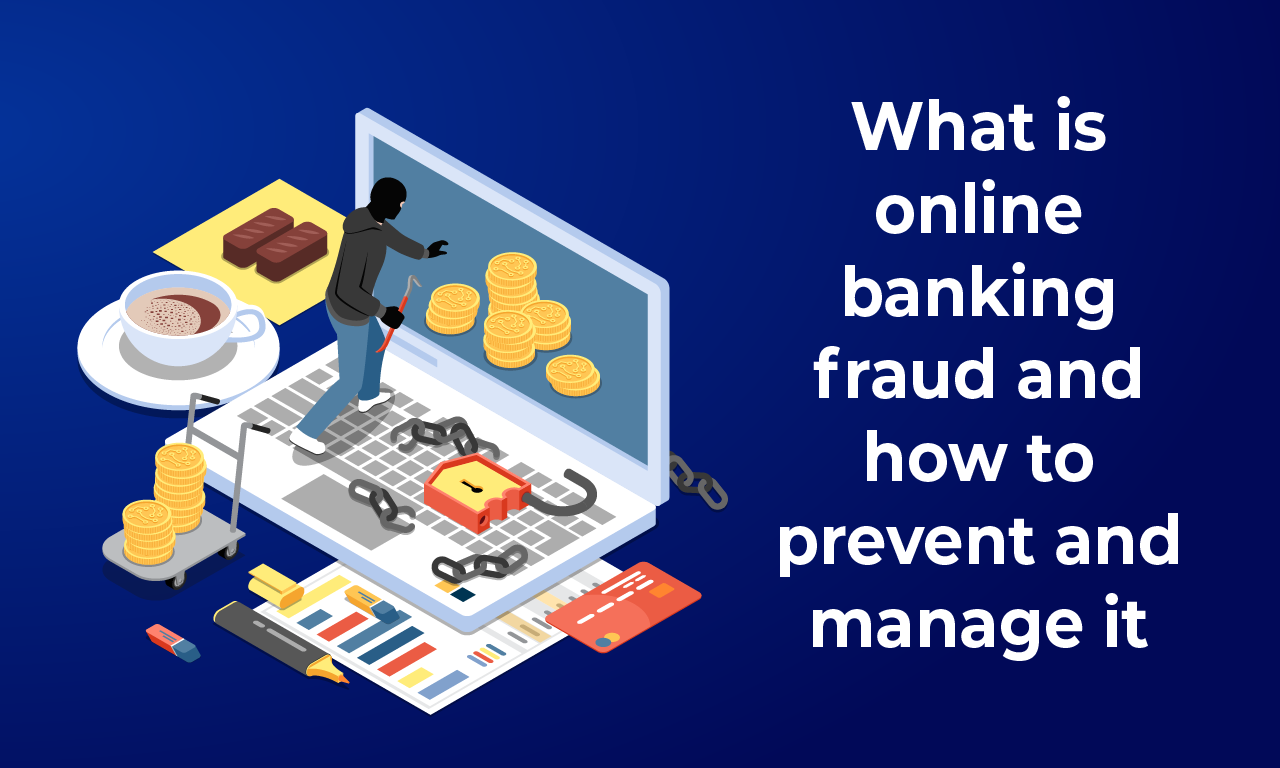
Online banking fraud is one of the fastest-growing financial crimes globally, and India is kinda at its epicenter. Per the data released by the Reserve Bank of India (RBI), banking frauds worth ₹48,021 crore were reported in 2025–26, which is a staggering 46.4% rise in value compared to the prior year.
Online Banking Fraud: What It Is, How to Detect It, and How to Prevent It
Online banking fraud is one of the fastest-growing financial crimes globally, and India is kinda at its epicenter. Per the data released by the Reserve Bank of India (RBI), banking frauds worth ₹48,021 crore were reported in 2025–26, which is a staggering 46.4% rise in value compared to the prior year.
So whether you’re a salaried professional, handling your savings through a mobile app, or a business owner dealing with daily transfers online, knowing what online banking fraud really is, and how to stop it, is no longer optional. It is essential for financial hygiene.
This article breaks down the most common types of banking fraud, explains how online banking fraud detection works today, and gives you clear, actionable steps on how to prevent online banking fraud before it touches your account.
What Is Online Banking Fraud?
Unlike traditional banking fraud, which often needs physical access to a bank or a cheque, online banking fraud kinda happens in the digital space. Criminals use little loopholes in the system to get into accounts without permission, then they redirect funds, or they simply take the identity credentials.
Online banking fraud is an umbrella term covering dozens of attack methods. What unites them is the use of technology to commit financial deception without physical confrontation.
Most Common Types of Online Banking Frauds
1. Phishing and Smishing Attacks
Phishing is still the most common type of online banking fraud. In fact, in a BAI banking survey, 73% of the customers at the institutions they looked at said they had run into phishing attacks. The scammers usually send out emails or SMS texts that look like genuine messages from your bank, and they try to get you to click a link, then type in your credentials.
2. Account Takeover (ATO) Fraud
Account takeover fraud is when a criminal gets hold of your bank account by stealing or guessing the login credentials, and yeah, it can happen pretty quickly. Usually, they go for credential stuffing, SIM swapping, or sneak in keylogging malware on your device.
3. Vishing (Voice Call Fraud)
Vishing is when a fraudster acts like a bank official, an RBI representative, or even a government authority during a phone call. They lean hard on urgency, like “do this now” energy, to pull out OTPs, CVV numbers, or net banking PINs from you. In India, vishing scams are often more refined than you’d expect, with spoofed caller IDs that show numbers that look like genuine bank contacts, so it feels real at first.
4. UPI and QR Code Fraud
India's UPI ecosystem processed over 1,589 crore transactions in Q1 2025 alone, making it a prime target. Fraudsters send fake payment requests, share QR codes that debit your account rather than credit it, or impersonate sellers to redirect payments.
If you want to actually understand how the UPI rails work end to end, which makes spotting these scams a lot easier, the Introduction to Digital Payments & UPI Ecosystem course walks through the India Stack and the payment infrastructure behind it.
5. Digital Arrest Scams
One of the most alarming emerging threats in India, digital arrest scams involve fraudsters impersonating law enforcement officers, CBI officials, or even judges. They convince victims they are under 'digital arrest' for a fabricated crime, coerce them into staying on a video call for hours or days, and demand large wire transfers as 'bail.'
How Does Online Banking Fraud Detection Work?
Understanding how banks detect fraud can help you appreciate why certain security prompts occur and how quickly threats can be mitigated. Understanding how banks detect fraud can help you appreciate why certain security prompts occur and how quickly threats can be mitigated. If this side of things genuinely interests you, the free Cybersecurity Readiness for Financial Systems course is a solid starting point on identity security and fraud controls.
Behavioural Biometrics
Deviations from established patterns trigger additional authentication challenges or automatic transaction blocks. An Experian report found that 85% of consumers identify physical and behavioural biometrics as the most trusted authentication method.
Transaction Monitoring
Banks use rule-based systems alongside AI to flag transactions that deviate from a customer's established patterns. Customers may receive instant SMS or app alerts asking them to confirm whether the transaction is genuine, thus giving them time to intervene.
Device Fingerprinting and IP Analysis
Each device that you use to reach net banking usually has its own fingerprint, sort of like a mix of browser version and other technical identifiers. If your account gets used from an IP address that’s been tied to fraud or shady activity, the bank’s systems can then start asking for authentication in a stricter way or temporarily block access for a while.
How to Prevent Online Banking Fraud: 8 Actionable Steps
While banks invest heavily in detection infrastructure, individual users remain a primary line of defence. Here is how to prevent online banking fraud at the personal level:
1. Enable Multi-Factor Authentication (MFA)
Make sure you enable MFA on your banking accounts, always. Use a strong password and then an OTP that gets sent to your registered mobile, plus, if it is there, biometric authentication too. Try not to stick to SMS-only OTP. If your bank also offers an authenticator app-based verification option, choose that; it is generally way more resistant to SIM swap attacks.
2. Use Official Banking Apps Only
Download your bank's app exclusively from the official Google Play Store or Apple App Store. Verify the developer name before installation. Fraudsters create convincing clone apps that harvest your credentials on first login.
3. Regularly Monitor Account Statements
Review your bank statements at least once a week. Enable push notifications for every transaction, no matter how small. Fraudsters often start with micro-transactions to test an account before executing a larger theft. Early detection is critical for fund recovery.
4. Secure Your Mobile Number
Since your mobile number is the backbone of OTP-based authentication, protect it actively. Set a SIM lock (SIM PIN) through your device settings. Register for your telecom provider's SIM swap alert service and immediately report if your phone loses network signal unexpectedly, a common sign of a SIM swap in progress.
5. Verify Before You Transfer
Before making any wire transfer or UPI payment, make sure to verify the recipient's account details through a known and trusted channel. Fraudsters routinely intercept email chains to substitute their own account numbers.
6. Be Sceptical of Urgency
Online banking fraud almost always involves manufactured urgency: your account will be blocked, your KYC will expire, you have an unclaimed refund, or you are under investigation. Pause before acting. Call your bank directly using the number on the back of your card or on the official website.
7. Set Transaction Limits
Most banks allow customers to set daily transaction limits for UPI payments, NEFT, RTGS, and debit card usage. Configure limits appropriate to your typical spending patterns. This caps the damage even if an account is compromised.
8. Register on the National Cyber Crime Portal
If you suspect fraud, report it immediately at cybercrime.gov.in or call the national helpline 1930. Under the RBI's zero-liability policy, victims who report unauthorized transactions within 3 days may be entitled to full reimbursement from their bank. Speed of reporting is critical.
What to Do If You Fall Victim to Online Banking Fraud
Here's what to do in case of a banking fraud
Call your bank's 24×7 fraud helpline immediately to block your account and report the unauthorized transaction.
File a complaint at cybercrime.gov.in and note the complaint number for tracking.
Report the incident to your local police station and obtain an FIR. This is often required by banks for a formal investigation.
Change all passwords and PINs for your banking and linked email accounts immediately.
Notify your telecom provider if you suspect a SIM swap.
Document everything: screenshots, transaction IDs, call logs as evidence for investigation.
Conclusion: Stay Ahead of Banking Frauds in 2025 and Beyond
Staying protected requires a combination of institutional vigilance and personal awareness. Banks are improving their online banking fraud detection capabilities with AI, biometrics, and real-time monitoring. However, the most effective prevention begins at the individual level — through informed, cautious, and proactive digital banking habits.
The single most powerful thing you can do to prevent online banking fraud is to stay informed. Fraud tactics keep changing, like really fast, so your awareness has to move too. Share this guide with family and colleagues, especially the people who are new to digital banking, because in 2025, your network’s security is basically your security as well.
Stay in the loop
Talk to our learning advisors
Get personalised guidance on courses and career paths related to this topic — no cost, no pressure.
- Free career counselling
- Course & eligibility guidance