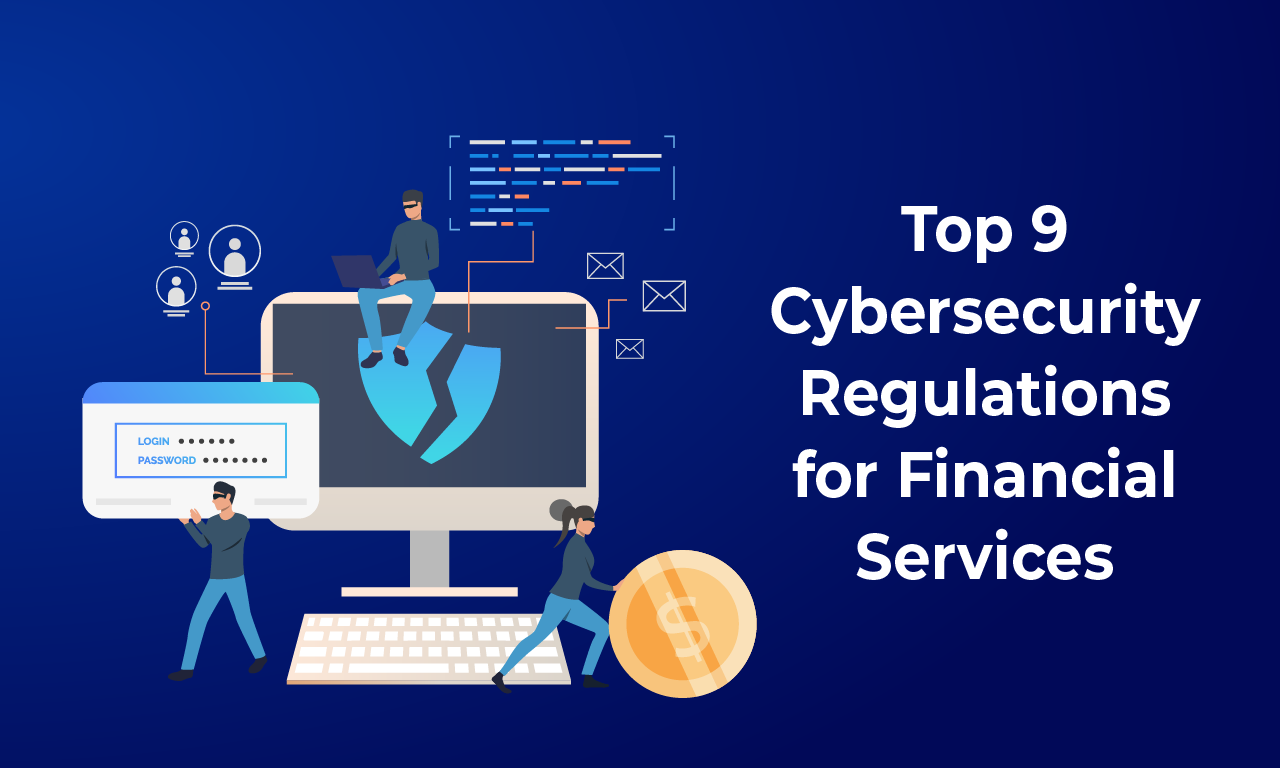
The finance sector has long been one of the biggest targets for cyber criminals. Every day, banks, insurance companies, and fintech businesses handle thousands of financial transactions, making them responsible for protecting some of the world's most valuable data.
Top 9 Cybersecurity Regulations for Financial Services
The finance sector has long been one of the biggest targets for cyber criminals. Every day, banks, insurance companies, and fintech businesses handle thousands of financial transactions, making them responsible for protecting some of the world's most valuable data.
A single security breach can lead to massive financial losses, legal trouble, and a damaged reputation. Therefore, an organization must have cybersecurity regulations to operate effectively. These regulations give organizations a guideline for how they can protect customer data, mitigate cyber risk, and remain prepared as technology advances. Curious about the regulations followed in cybersecurity? You have come to the right place.
Why Cybersecurity Regulations are Important to the Finance Sector
Each day, banking institutions, insurance providers, investment firms, and fintechs handle large quantities of sensitive financial information, which leads cyber criminals to target these organizations to steal data, interrupt operations, or commit other forms of fraud. Effective cyber security in financial sector is no longer optional; it is a business necessity.
Cybersecurity regulations provide organizations with the specific minimum standards that are required for protecting customer data, managing cyber risk, responding to incidents, and maintaining secure systems. They also encourage all organizations to adopt improved financial data security practices while providing for improved operational resiliency and keeping pace with changes in statutory requirements.
In addition to avoiding penalties for noncompliance with regulations and laws, by adhering to regulatory requirements, financial institutions gain customer trust and protect their reputations in the rapidly developing digital economy.
Top 9 Cybersecurity Regulations Every Financial Organization Should Know
There are very few industries that have stricter expectations related to security than financial institutions. The regulations of cybersecurity for finance outlines the methods organizations must use to secure their information, systems, and, most importantly, trust.
1. General Data Protection Regulation (GDPR)
The EU GDPR provides strict regulation for organizations that collect, process, and store the personal data of European Union individuals. Any financial institution that has EU customers is required to have strong security measures and obtain proper authorization/consent to collect, process, and store their personal data.
In addition to requiring rigorous security measures, organizations must also disclose certain types of data breaches to the impacted customers within a specific time frame, thus ensuring that transparency is as important as security.
2. Gramm-Leach-Bliley Act (GLBA)
The GLBA was created to protect the private financial information of their customers located in the United States. In meeting this requirement, financial institutions must create, implement, and maintain security programs that are designed to identify all potential risks, protect all sensitive data, and continuously evaluate their cybersecurity controls as malicious acts against financial institutions continue to evolve.
3. Payment Card Industry Data Security Standard (PCI DSS)
PCI DSS is a global security standard for organizations that store, process, or transmit payment card information. This regulatory standard requires businesses to secure payment systems and protect themselves from payment fraud and data breaches by implementing encryption, access controls, vulnerability management, and continuous monitoring.
4. Sarbanes-Oxley Act (SOX)
Primarily focused on financial reporting, SOX places substantial importance on establishing strong internal controls over financial systems and records. Maintaining a secure IT environment (protecting data), access management, and accurate record-keeping help organizations ensure that the financial information is protected, comply with regulatory requirements, and maintain accountability.
5. Bank Secrecy Act (BSA)
The Bank Secrecy Act helps financial institutions detect and prevent money laundering, terrorist financing, and other financial crimes. It requires financial institutions to maintain transaction records, monitor potentially suspicious transactions, and report certain transactions to the appropriate regulatory authorities, resulting in maintained integrity across financial systems.
6. Payment Services Directive 2 (PSD2)
The PSD2 promotes advancements in electronic payment services in the European Union by enhancing secure options in digital payment services and supporting the implementation of open banking.
One of its most significant requirements is Strong Customer Authentication (SCA), which adds extra verification steps to protect users and reduce payment fraud.
7. Federal Financial Institutions Examination Council (FFIEC)
The FFIEC is an organization that develops guidelines and standards for examining cybersecurity practices for U.S. financial institutions. While it does not make federal laws, it provides banks and other financial institutions with resources to strengthen their cybersecurity risk management, governance over their cybersecurity, incident response capabilities, and secure banking operations.
8. Digital Operational Resilience Act (DORA)
The DORA regulation creates a comprehensive cyber risk management framework that applies to all businesses that operate within the European Union. This regulation focuses on improving their operational resilience through monitoring and reporting on ICT risks, establishing third-party risk management programs, and ensuring their ability to operate through cyber attacks.
9. New York Department of Financial Services Cybersecurity Regulation (NYDFS Part 500)
The NYDFS Part 500 cybersecurity regulations apply to many financial service providers in New York. Financial institutions must develop and maintain a cybersecurity program, designate qualified personnel to lead cybersecurity, perform regular risk assessments, and have an incident response plan to help protect customers’ personal information and the institution's essential business operations.
Best Practices for Staying Compliant with Cybersecurity Regulations
No regulation can eliminate cyber risks on its own.Thus, security compliance only works best when they are supported by strong day-to-day practices. Financial organizations should focus on the following practices:
Carrying out regular risk assessments to identify security gaps before attackers do.
Encrypting sensitive customer information to strengthen financial data security.
Reviewing the cybersecurity practices of third-party vendors and business partners.
Training employees to spot phishing emails, social engineering attacks, and other common threats.
Creating and testing incident response plans so teams know exactly what to do during a cyberattack.
Reviewing security controls regularly to keep pace with changing regulations and emerging threats.
The Cost of Non-Compliance
The cost of failing to comply with cybersecurity regulations goes far beyond financial consequences. A single instance of non-compliance may result in: loss of data, legal liability, interruption of business operations, and loss of confidence from customers.
In an industry that's built on trust, recovering from damage to one's reputation can take years. The cost of investing in cybersecurity practices today is nearly always less than the cost of dealing with the aftermath of a cyber attack tomorrow.
How Cybersecurity Regulations Are Changing Every Day
Cyber threats are not standing still, and neither are regulations. Regulators and government bodies are continuously updating their existing regulations to reflect the fast pace of change due to cyber threats, for example, ransomware, cloud security, third-party vulnerabilities, and AI-based attacks.
Because compliance is not a project that is done only once, organizations must continuously review their security approach to ensure they are meeting today's regulatory expectations. By doing this, the business can avoid getting caught by surprise when they are required to comply with larger regulatory changes.
Building a Culture of Cybersecurity
Cybersecurity is not just the responsibility of the IT department. Employees at all levels contribute to the protection of sensitive financial information. One way to reduce human error, which is one of the top causes of cyber incidents, is to provide ongoing security awareness training, establish clear policies, and have open lines of communication between departments. A culture of security ensures compliance while making your organization more resilient to changing threats.
Final Words
Cybersecurity requirements are not just legal requirements; they also help protect customers, their sensitive data, and mitigate cyber threats. The financial services sector continues to be transformed by digital technology, so organizations must invest in effective cybersecurity practices and solutions to protect their customers and every financial transaction while preparing for new threats and maintaining their customers' trust into the future.
Stay in the loop
Talk to our learning advisors
Get personalised guidance on courses and career paths related to this topic — no cost, no pressure.
- Free career counselling
- Course & eligibility guidance